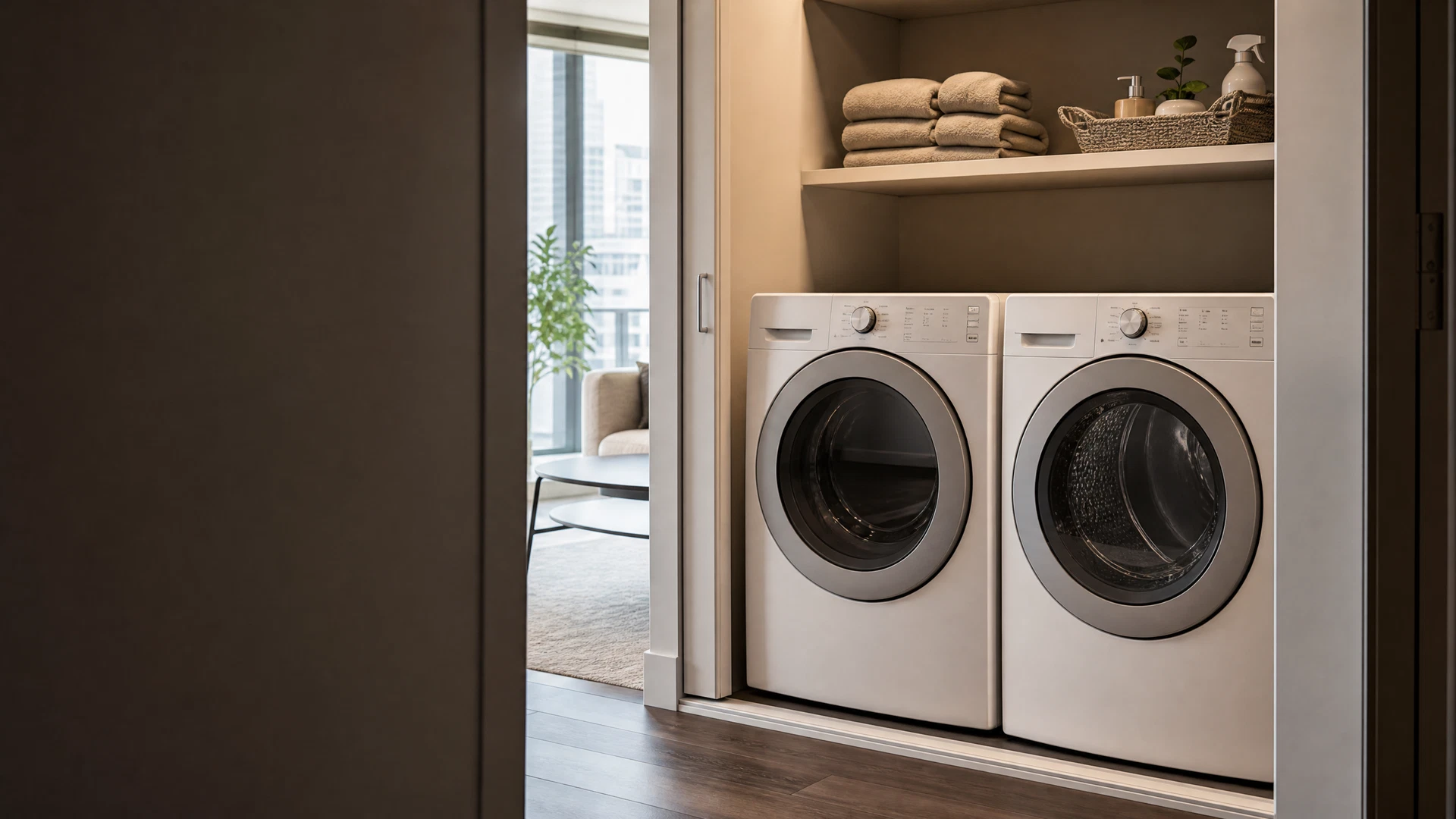
In-Suite Laundry in a Rental Property: Maintenance, Repairs, and Upgrade Decisions
In-suite laundry is a top-tier amenity for Metro Vancouver tenants, but it comes with significant maintenance and repair responsibilities for landlords. This guide explores how to protect your investment, navigate BC rental laws, and decide when it is time to upgrade your appliances.
The Strategic Value of In-Suite Laundry in Metro Vancouver
In-suite laundry remains one of the most sought-after amenities for tenants across Metro Vancouver, particularly in dense urban centres like Yaletown or Brentwood. For landlords, providing a private washer and dryer is not just a convenience: it is a strategic investment that significantly enhances property appeal and tenant retention. While the initial cost of installation and the ongoing risk of maintenance are factors to consider, the ability to attract high-quality long-term renters often outweighs these concerns. In a competitive market where many older buildings only offer shared laundry facilities, having a private unit allows a property to stand out. This amenity often justifies a premium on monthly rent and reduces the time a unit remains vacant between tenancies.
Landlord Obligations for Appliance Repairs Under BC Law
In British Columbia, the Residential Tenancy Act is clear regarding the maintenance of services and facilities included in a rental agreement. According to Section 32 of the Act, a landlord must provide and maintain the residential property in a state of decoration and repair that complies with health, safety, and housing standards established by law. If a washing machine or dryer is provided at the start of the tenancy, the landlord is generally responsible for ensuring it remains in good working order. While a broken dryer is not typically classified as an "emergency repair" that requires immediate action, it must be addressed within a reasonable timeframe. Landlords should avoid the temptation to remove a broken appliance without replacement, as this could be viewed as a reduction in service.
Proactive Maintenance to Prevent Water Damage and Costly Repairs
Preventative maintenance is the most effective way to mitigate the risks associated with in-suite laundry, especially in multi-unit strata buildings where water damage can lead to massive insurance claims. Landlords should conduct regular inspections to ensure that washing machine hoses are not cracked or leaking and that dryer vents are clear of lint buildup. In the rainy climate of the Lower Mainland, moisture control is vital to prevent mould growth in laundry closets. Providing tenants with clear instructions on how to clean lint traps after every use and how to avoid overloading the machines can significantly extend the lifespan of the equipment. Installing braided stainless steel hoses and water leak sensors provides an extra layer of protection against unexpected floods.
Repair vs. Replace: Making Smart Upgrade Decisions
Deciding whether to repair an aging laundry unit or replace it entirely is a common dilemma for Vancouver landlords. As a general rule, if the cost of a single repair exceeds fifty percent of the price of a new machine, replacement is often the more economical choice. Modern appliances are significantly more energy-efficient and use less water, which can be a selling point for environmentally conscious tenants. When selecting new units, durability and ease of repair should be prioritized over complex digital features that are prone to failure. Landlords should also consider the "useful life" guidelines provided by the Residential Tenancy Branch when calculating depreciation for tax purposes. New, reliable appliances reduce future maintenance calls and keep tenants satisfied with their living environment.
Navigating Strata Bylaws and Risk Mitigation
For landlords owning condos in Metro Vancouver, strata bylaws often dictate specific requirements for in-suite laundry systems. Some strata corporations mandate the use of specific types of hoses or require professional dryer vent cleaning on an annual basis. Failure to comply with these rules can result in significant fines or liability if a leak occurs. It is essential for landlords to review their strata's insurance policy and ensure their own landlord insurance provides adequate coverage for water damage originating from their unit. Clear communication with tenants regarding strata rules is also necessary to ensure compliance. By staying proactive and documenting all maintenance activities, landlords can protect their investment and maintain a positive relationship with both their tenants and the strata council.
Frequently Asked Questions
Who is responsible for cleaning the dryer lint trap?
Tenants are responsible for the basic day-to-day upkeep of the appliances they use. This includes cleaning the dryer lint trap after every load to prevent fire hazards and ensure the machine operates efficiently. Landlords should include these expectations in a tenant welcome guide to ensure the equipment is treated with care.
Can a landlord charge extra for in-suite laundry after the lease is signed?
No, a landlord cannot unilaterally add a new fee for a service that was already included in the original tenancy agreement. If laundry was provided as part of the rent, it must remain so. Any changes to the terms of the tenancy, including new fees, would require a formal amendment agreed upon by both parties or a new lease agreement.
What happens if a tenant damages the laundry unit through negligence?
While landlords are responsible for normal wear and tear, tenants may be held liable for repairs if damage is caused by their negligence or misuse. For example, if a tenant washes items that damage the drum or fails to report a visible leak that eventually causes floor damage, the landlord may be able to claim the repair costs from the tenant or their security deposit.
Free Tools for BC Landlords
Try these free calculators to help with your rental property decisions:
Sources & Further Reading
The following authoritative resources were referenced in preparing this article:
- BC repairs and maintenance(Government of British Columbia)
- PreparedBC emergency planning(Government of British Columbia)

Amir Shojaee
Founder & Managing Director
Licensed Property Manager & REALTOR • MEng, UBC
With over 9 years of experience managing rental properties across Greater Vancouver, Amir brings an analytical, investor-minded approach to property management. Every recommendation is backed by data, every process is documented, and every interaction is handled with the care your investment demands.
Get Property Management Tips
Join landlords across Greater Vancouver who receive our latest articles on property management, BC regulations, and market insights.
No spam. Unsubscribe anytime.
Need help with your property?
Whether you have questions about rent increases, tenant screening, or full-service management, our team is here to help.
Request a CallbackProperty Management Across Greater Vancouver
We provide full-service property management in 16 municipalities across Metro Vancouver and the Fraser Valley. Learn more about our services in your area: